

If you’ve been filing a “stubborn corn” on your sole, trying acid plasters, and it still hurts when you walk, it may not be a corn at all. Many people only realise they have a foot wart (verruca) after months of self-treatment.
At Podiatry Quest Singapore, we commonly see plantar warts in people who are active on their feet, including those walking lots around Harbourfront, Sentosa, and nearby gyms and studios. The good news is that warts are treatable, but they often need the right diagnosis and a step-by-step plan.
What you’ll learn
- How to tell a wart from a corn (and why it matters)
- What home treatment can and cannot do
- When clinic-based treatments like nitric acid may be worth considering
- How to reduce recurrence after your wart clears
This post is for people in Singapore who suspect they have a plantar wart and want a clear, practical pathway (not vague “try salicylic acid” advice). It focuses on wart vs corn clarity, why OTC care fails, and what a podiatry wart-removal process looks like.
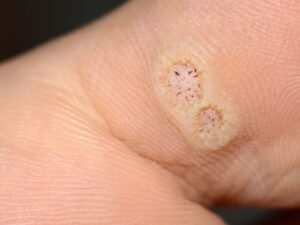
What are foot warts (plantar warts)?
Foot warts are a viral skin infection (commonly linked to HPV) that can occur on the sole. Unlike surface warts on hands, plantar warts can sit under thicker skin and callus, which makes them harder to treat and easier to mislabel as “just hard skin”.
Wart vs corn: how to tell the difference (a quick self-check)
You can’t always confirm this at home, but these clues help:
- Pain pattern
- Warts often hurt with a “pinch” or side-to-side squeeze.
- Corns often hurt more with direct downward pressure.
- Skin lines
- Warts may disrupt normal skin lines.
- Corns often preserve skin lines.
- Pinpoint dots
- Warts may show tiny dark/red dots (small blood vessels), especially after light filing.
If you’re unsure, it’s worth getting assessed before you keep filing. Repeated shaving/filling can irritate the area and still miss the active wart tissue.
Why over-the-counter wart treatments often fail
In clinic, we often hear: “I used salicylic acid for weeks, nothing changed.” Common reasons include:
- It wasn’t a wart (it was a corn/callus, or another skin lesion).
- The wart is sitting deep under a thick callus “shield”.
- Treatment wasn’t consistent enough or wasn’t targeted to the active tissue.
- The surrounding skin gets damaged more than the wart, so you stop early.
- Reinfection happens from barefoot exposure in shared damp areas.
First steps you can try (safe, simple, and realistic)
If the area is not bleeding, not rapidly changing, and you don’t have high-risk medical conditions, conservative steps may help:
- Keep the area clean and dry.
- Avoid picking or aggressively cutting the lesion.
- Use footwear in communal wet areas (pool decks, gym showers).
- If using OTC acid products, follow instructions carefully and stop if the surrounding skin becomes very sore.
If you have diabetes, poor circulation, reduced sensation, or you’re immunocompromised, avoid DIY cutting/acid use and get assessed early.
When foot warts removal should be done by a podiatrist
Consider a podiatry assessment if:
- It’s painful enough to change how you walk.
- It’s spreading, multiplying, or recurring.
- You’ve tried OTC treatments for several weeks with little change.
- You’re not sure if it’s a wart or a corn.
- You have an upcoming event and need a safer plan.
Harbourfront context: why active feet can make warts feel worse
Long walking days around Harbourfront and Sentosa can increase pressure on the sole, which can make a wart feel sharper. If you’re compensating without realising it, you may also overload your heel, arch, or forefoot.
Clinic-based option: debridement + medical-grade nitric acid (what to expect)
At Podiatry Quest, our approach to plantar warts commonly involves:
- Sterile debridement
We carefully remove the hard callused layer that can “shield” the wart, so treatment can reach active tissue. - Medical-grade nitric acid application
For suitable cases, a controlled nitric acid treatment may be used. The goal is to target the wart tissue while keeping the process as comfortable as possible. - Multiple sessions
Warts often require a series of treatments. Many cases need multiple sessions over time, depending on size, depth, and location.
Clinician’s perspective (what we commonly see)
Two patterns show up again and again:
- “It’s just a corn” for months: people keep self-filing because it looks like hard skin. By the time it’s checked, the wart is deeper and more painful.
- Treatment without exposure control: even when the wart improves, going barefoot repeatedly in shared damp areas can increase reinfection risk.
What most people get wrong about foot warts removal
- Expecting one product or one treatment session to fix it immediately.
- Treating the surface callus but missing the active wart tissue underneath.
- Damaging the surrounding healthy skin, then stopping too early.
What to do if your wart keeps coming back
If recurrence happens, a podiatrist may review whether there are multiple small satellite warts, whether pressure points are keeping the area irritated, and whether footwear and moisture control are contributing.
How to reduce recurrence after treatment
- Wear slippers in shared wet areas.
- Don’t share nail tools, pumice stones, or foot files.
- Keep socks dry and change after workouts.
- Alternate shoes to let them dry fully.
Frequently Asked Questions
How many sessions does foot warts removal usually take?
It varies. Plantar warts commonly need multiple sessions, especially if the lesion is deep or has been present for a long time.
Is nitric acid wart treatment painful?
Many people tolerate clinic treatment well. Mild soreness for a short period can happen, especially if the wart is on a high-pressure area.
Can I keep exercising or walking after treatment?
Often yes, with sensible footwear and short-term modifications if the area is sore. Your podiatrist can advise based on where the wart sits and your activity level.
How do I know it’s a wart and not a corn?
Warts can show pinpoint dots, disrupt skin lines, and hurt with a side-to-side squeeze. Corns are more often linked to pressure and friction and can hurt with direct pressure. If you’re unsure, an assessment helps avoid weeks of incorrect treatment.
When should I seek urgent assessment?
Seek prompt review if there’s rapid change, bleeding that won’t settle, significant swelling, signs of infection, or if you have diabetes/poor circulation and a painful foot lesion.
Key takeaways
- Foot warts can sit deep under callus, so they’re commonly mistaken for corns.
- If OTC care isn’t working, diagnosis and a structured in-clinic pathway can save time.
- Clinic-based options may include debridement plus nitric acid treatment in suitable cases, and it typically needs multiple sessions.
- Recurrence prevention (footwear in wet areas, moisture control) matters.
If you’d like clarity on whether you’re dealing with a wart or a corn, and you want a step-by-step plan for foot warts removal in Singapore, book an assessment with Podiatry Quest.
We have clinics across Holland Grove, Novena, Tampines, Harbourfront, and Raffles Place.
- Phone: +65 6027 2389
- WhatsApp: +65 8333 9643
Website: https://www.podiatryquest.sg/
