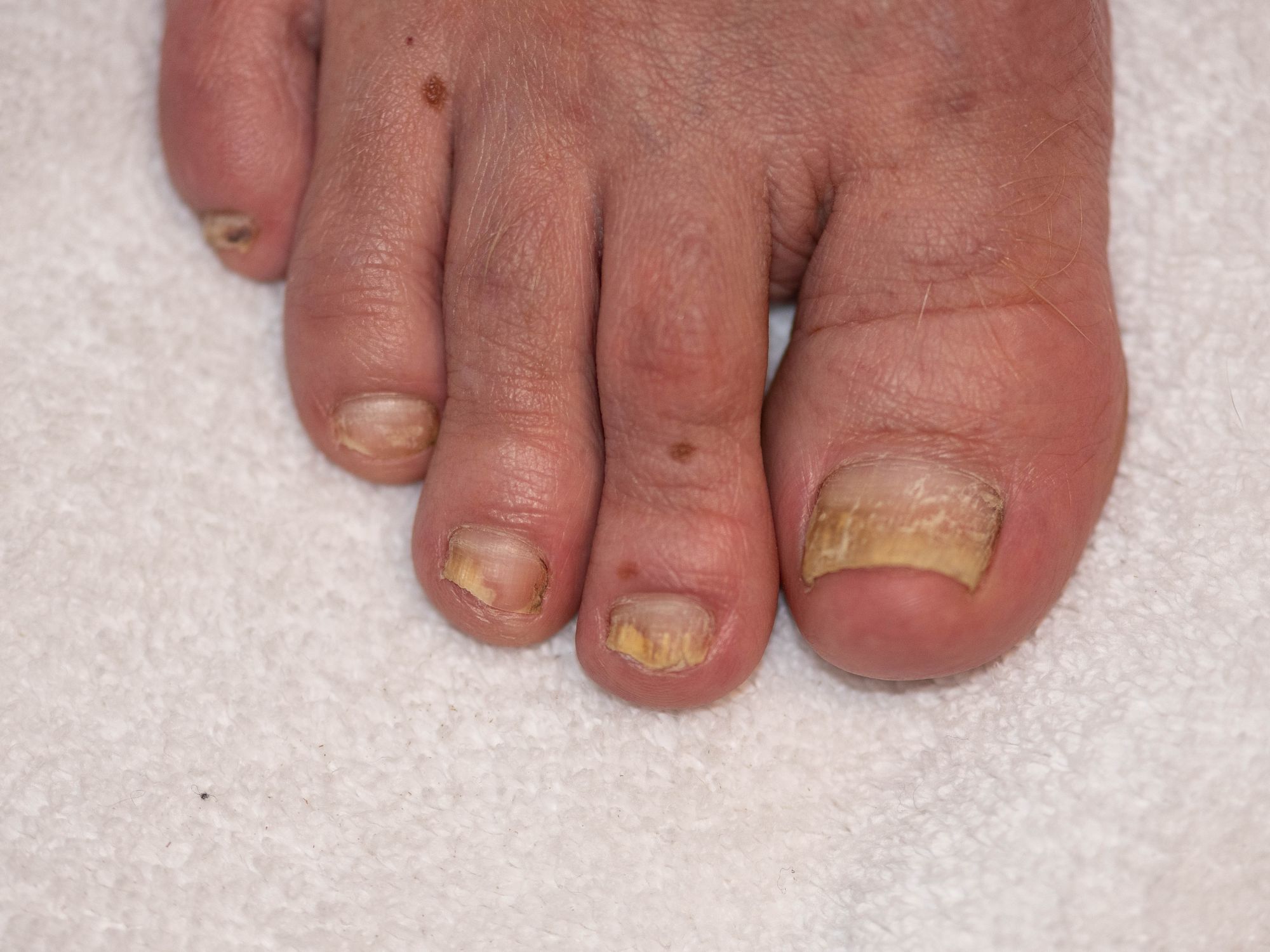
Fungal Toenails

Overview

A fungal nail infection, clinically termed onychomycosis, is a persistent dermatophytic or non-dermatophytic infection of the nail plate, nail bed, and underlying germinal matrix. The primary causative pathogens are dermatophytes—predominantly Trichophyton rubrum and Trichophyton mentagrophytes—alongside opportunistic yeasts (Candida) and non-dermatophyte moulds.

These fungal organisms synthesise keratolytic enzymes that digest keratin, the fundamental structural fibrous protein of the nail. As the pathogens proliferate beneath and within the keratinised layers, the nail plate detaches from the vascular nail bed (onycholysis), structural integrity collapses, and subungual hyperkeratotic debris accumulates. Left untreated, the infection becomes a chronic reservoir that spreads to adjacent digits, triggers secondary bacterial paronychia, and induces debilitating biomechanical pain during ambulation.

Work With Us

Pathological Triggers in Singapore

While genetic susceptibility and peripheral microvascular health influence host vulnerability, environmental and lifestyle factors unique to Singapore significantly accelerate fungal proliferation:

  • Tropical Microclimates and Hyperhidrosis: High ambient temperatures paired with excessive humidity create an ideal tropical incubator for fungal spores. Prolonged closed-shoe wear causes profuse foot perspiration (hyperhidrosis), trapping moisture inside the sock liner and macerating periungual skin.

  • Communal Moisture Exposures: Walking barefoot across damp, high-traffic communal flooring—such as condominium swimming pool decks, public gym shower facilities, martial arts dojos, and fitness studios—exposes vulnerable feet to desquamated infected skin scales left by others.

  • Occupational and Military Footwear: Rigid, non-breathable footwear, including SAF combat boots, corporate leather dress shoes, and industrial steel-toe boots, exerts repetitive mechanical microtrauma against the dorsal distal margins of the toes. This microtrauma breaches the distal hyponychium barrier, establishing an immediate entry portal for fungal pathogens.

  • Pre-Existing Tinea Pedis (Athlete’s Foot): Untreated fungal skin infections of the plantar foot or interdigital toe web spaces frequently spread into the adjacent nail margins, establishing a continuous cycle of reinfection.

Clinical Stages and Urgent Warning Signs

Onychomycosis does not self-resolve. The fungal colony advances progressively deeper into the ungueal structures, categorised by distinct clinical presentations:

Clinical Subtype / Stage Pathological Presentation Podiatric Action Required
Stage 1: Superficial / Distal-Lateral (DLSO) Discrete white chalky patches on the dorsal surface, or yellowish streaks at the distal-lateral edge. Nail remains intact. Conservative surface burring, specialised podiatric debridement, topical antifungal lacquers.
Stage 2: Moderate Subungual Hyperkeratosis Spreading yellow-brown discolouration across >50% of the plate, noticeable subungual crumbling debris, and lateral onycholysis. Mechanical nail thinning (reduction of fungal biomass) paired with targeted Photodynamic Antimicrobial Therapy (PACT).
Stage 3: Total Dystrophic Onychomycosis (TDO) Complete structural destruction. The entire nail plate is thickened, severely distorted, painful, and detached from the nail bed. Intensive podiatric debridement, combination light therapy, or total chemical/surgical nail avulsion.

When Is It Urgent?

While fungal nails often begin as a cosmetic frustration, certain clinical presentations demand immediate medical attention:

  1. Secondary Bacterial Cellulitis: When jagged, thickened fungal nail edges lacerate adjacent periungual skin, opportunistic bacteria enter. Spreading redness, intense local throbbing, heat, and tracking oedema indicate an acute secondary bacterial infection.

  2. Diabetic and Neuropathic Vulnerability: In patients with Type 1 or Type 2 diabetes or peripheral neuropathy, loss of protective sensation means fungal debris buildup and hypertrophic nails can cause subungual pressure ulcers without pain. Unmanaged ulcers carry a high risk of deep tissue necrosis and osteomyelitis (bone infection).

  3. Severe Peripheral Arterial Disease (PAD): Reduced arterial flow impedes the immune response and slows tissue repair. Thickened fungal plates exert focal pressure on the ischaemic nail bed, creating necrotic pressure sores that struggle to heal.

Why Over-the-Counter Paints and Home Remedies Fail

Patients often spend months or years applying pharmacy lacquers, tea tree oil, or vinegar soaks with minimal improvement:

  • The Keratin Penetration Barrier: The human nail plate is composed of up to 25 tightly compacted layers of dead, highly keratinised cells. Superficial paints sit on the dorsal surface and fail to penetrate deep into the ventral nail plate or the underlying nail bed where the mycelial colony resides.

  • Hyperkeratotic Biomass: When the nail thickens, the fungus builds a dense buffer of keratin debris beneath the plate. Applying topical antifungals without debriding this dead biomass is clinically ineffective.

  • Slow Regrowth Timelines: A great toenail requires 12 to 18 months to fully replace itself. Without clinical reduction of the infected plate, the fungus grows proximally faster than the nail can regenerate distally.

How We Help

Treatment Options: Clinical Pathways

Effective eradication requires reducing the fungal bio-burden and sterilising the underlying germinal matrix and nail bed.

                          [Diagnostic Assessment]
                                     │
         ┌───────────────────────────┴───────────────────────────┐
         ▼                                                       ▼
[Early / Superficial Infection]                      [Moderate / Chronic Hypertrophic]
  • Medical nail debridement                           • Mechanical electric burring
  • Prescription topical therapy                       • PACT photodynamic light therapy
  • Hygiene & spore sanitisation                       • Structural matrix clearance

1. Mechanical Debridement and Medical Thinning

The foundational first step in any successful fungal regimen is professional clinical thinning. Performed during our skin and nail care consultations, podiatrists use sterile, diamond-coated rotary burrs with integrated medical suction to reduce the nail plate to its physiological thickness.

This process painlessly eliminates up to 80% of the active fungal biomass, removes subungual debris, and creates a clear pathway for topical and antimicrobial therapies to reach the infected nail bed directly.

2. PACT® Photodynamic Antimicrobial Therapy

For patients seeking a drug-free, non-toxic, and painless eradication method, Podiatry Quest utilises Photodynamic Antimicrobial Therapy (PACT).

PACT offers a potent alternative to oral antifungal medications (which can place metabolic stress on the liver and interact with common prescriptions) and topical lacquers alone:

  1. Targeted Photosensitisation: A specialised photosensitising gel containing toluidine blue is applied to the thinned nail plate and left to incubate. The dye binds selectively to the unique cell walls of fungal organisms without absorbing into healthy human tissue.

  2. Light Activation: The nail is irradiated with a high-intensity red LED light at a specific wavelength (630 nm). This photochemical reaction excites the dye, generating high levels of singlet oxygen ($^1O_2$) that ruptures the fungal cell membranes and neutralises active fungal spores within minutes.

  3. Zero Thermal Damage & No Downtime: PACT produces no heat, causes zero tissue damage, and requires no anaesthetic or recovery period. Patients walk out and continue normal physical training and work routines immediately.

Prevention and Foot Hygiene Protocol

Eradicating toenail fungus is only half the battle; preventing recurrence in Singapore’s tropical climate requires diligent environmental controls:

  • Anti-Fungal Laundry and Disinfection: Wash athletic and everyday socks in water temperatures of at least 60°C to destroy fungal spores. Periodically disinfect shoes with antimicrobial sprays or UV sanitiser inserts.

  • Footwear Rotation and Ventilation: Never wear the same pair of closed shoes on consecutive days. Give footwear at least 24 hours to air out in an open, dry space rather than an enclosed shoe cabinet.

  • Absorbent, Moisture-Wicking Fabrics: Replace pure cotton socks with technical moisture-wicking synthetic or bamboo fibres that pull sweat away from the skin. Apply drying foot powders if prone to hyperhidrosis.

  • Protective Footwear in Public Wet Zones: Always wear flip-flops or water shoes when navigating condominium pool decks, gym changing rooms, and public shower facilities.

  • Correct Instrument Hygiene: Never share nail clippers, emery boards, or files across household members. Always clip healthy nails before trimming an infected nail, and disinfect clippers with 70% isopropyl alcohol after each use.

Frequently Asked Questions: Fungal Nails

How long does it take for a fungal toenail to fully clear?

Because toenails grow slowly at roughly 1 to 2 mm per month, a completely clear, healthy nail requires 9 to 18 months to grow out fully from the base. Treatment stops the infection from advancing, while subsequent healthy growth replaces the discoloured, damaged plate.

Is PACT photodynamic nail therapy painful?

No. PACT therapy is entirely pain-free and non-thermal, meaning you will not feel heat, pinching, or stinging during the light application. It does not require local anaesthetic and has no reported systemic side effects.

Can I paint my toenails with cosmetic polish during treatment?

Standard nail polish forms an occlusive barrier that traps moisture, encourages fungal growth, and blocks therapeutic light and topical agents from working. During active treatment, cosmetic nail polish must be avoided, although specialised breathable, antifungal-infused polishes may be approved by your podiatrist once the active infection is controlled.

Do oral antifungal medications work better than podiatry treatments?

While oral antifungals can be effective, they require long courses, carry risks of hepatotoxicity (liver stress), and require blood monitoring. Podiatry treatments such as medical debridement combined with PACT photodynamic therapy target the fungal colony directly at the nail plate without systemic metabolic strain.

Book Your Clinical Consultation at Podiatry Quest Singapore

Discoloured, brittle, and crumbling toenails will not resolve with home soaking or superficial cosmetic paints. Professional podiatric care clears the infected debris, neutralises active pathogens, and restores healthy ungueal growth.

Contact Podiatry Quest Singapore to schedule an initial diagnostic assessment at our Novena, Raffles Quay, Harbourfront, Tampines, or Holland Grove clinics.

Visit Us

All are welcome!

Podiatry Quest – Holland Grove

Appointment basis; please reach out!

We are situated in a mixed-used estate called Parksuites. There is on-site parking if required.

Bus 92 from Buona Vista MRT.

Monday: Closed
Tuesday: 9am – 8pm
Wednesday: 9am – 6pm
Thursday: Closed
Friday: 9am – 6pm
Saturday: 1230pm – 430pm
Sunday & Public Holidays: Closed

Podiatry Quest – Novena

Appointment basis; please reach out!

The clinic is located on level 3 Novena Square, down a corridor right opposite the lifts.

Monday: Closed
Tuesday: Closed
Wednesday: 9am – 6pm
Thursday: 10am – 7pm
Friday: Closed
Saturday: 9am – 1pm
Sunday & Public Holidays: Closed

Podiatry Quest – Raffles Place

Appointment basis; please reach out!

We are next to Hong Leong building. There is on-site parking in the building if required.

Monday: 9am – 6pm
Tuesday: Closed
Wednesday: 9am – 6pm
Thursday: Closed
Friday: Closed
Saturday: Closed
Sunday & Public Holidays: Closed

Podiatry Quest – Harbourfront

Appointment basis; please reach out!

You’ll be required to register at the lobby with the building concierge and they will direct you to the correct lifts to our clinic – please cater time for this.

Monday: Closed
Tuesday: 9am – 6pm
Wednesday: Closed
Thursday: 9am – 6pm
Friday: Closed
Saturday: 9am – 1pm
Sunday & Public Holidays: Closed

Podiatry Quest – Tampines

Appointment basis; please reach out!

Monday: 9am – 6pm
Tuesday: Closed
Wednesday: Closed
Thursday: Closed
Friday: 9am – 6pm
Saturday: Closed
Sunday & Public Holidays: Closed

Contact Us

Have any questions or inquiries? Get in touch with us today here or on WhatsApp!

Name