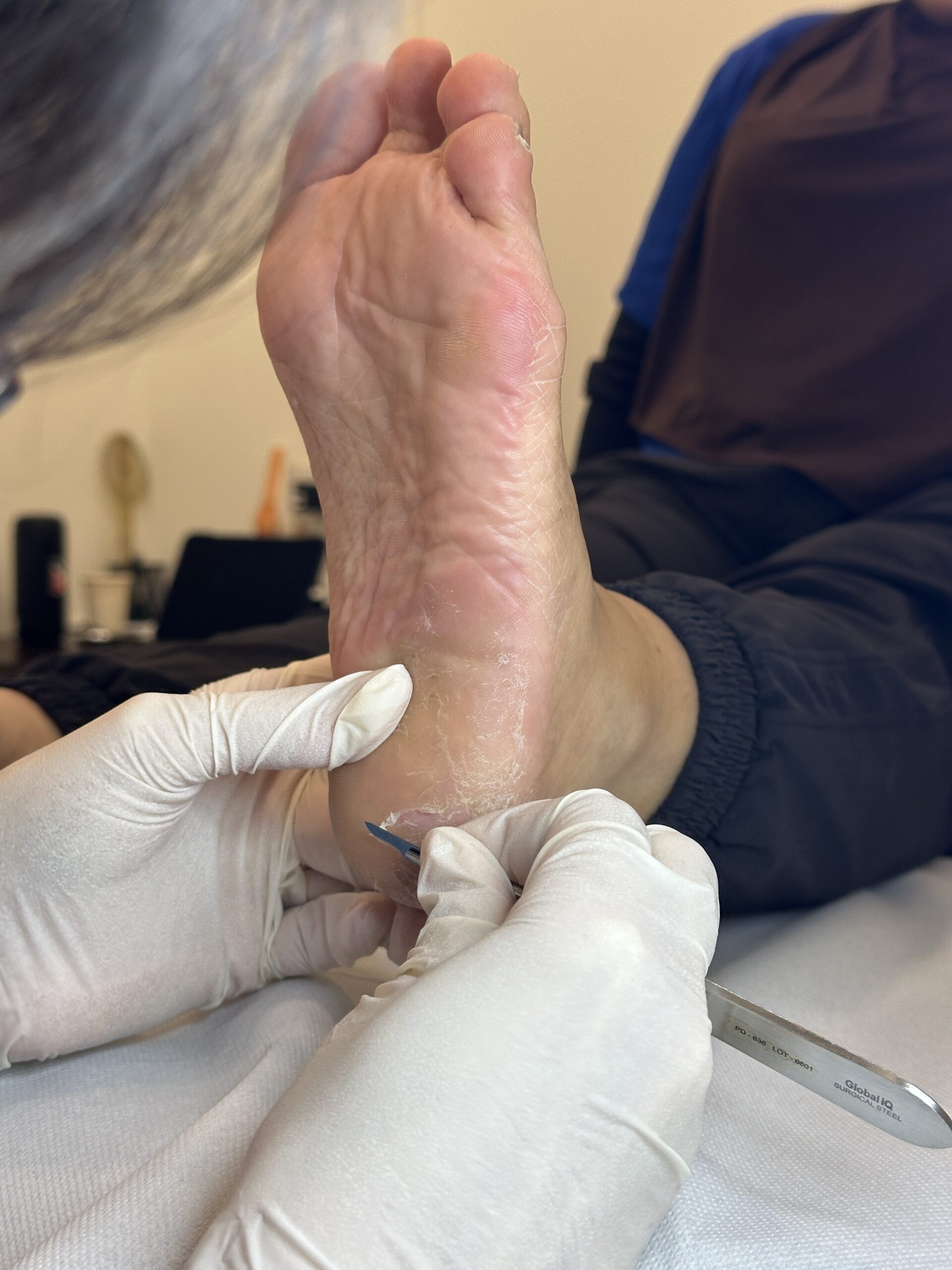
If you have a thick, painful callus on your heel or the ball of your foot, you have probably tried a pumice stone, a “callus shaver”, or a stronger cream. Sometimes it helps for a week, then the hard skin comes right back.
In our clinics, we commonly see people who are not “bad at foot care”. They are dealing with pressure, friction, and footwear choices that keep re-triggering callus build-up.
If you are in Singapore and the discomfort is affecting walking, exercise, or work shoes, a podiatrist can help with safe callus reduction and, more importantly, offloading the pressure that causes the callus.
This article is for people in Singapore who want calluses removal because the hard skin is painful or keeps recurring. It focuses on the real reasons calluses return (pressure patterns, shoe fit, gait) and how to reduce recurrence with offloading, not just “how to scrape it off”.
What you’ll learn
- Why calluses keep returning even after you “remove” them
- What at-home callus care is safe, and what usually backfires
- When calluses need professional assessment and offloading
What is a callus, and why does it form?
A callus is an area of thickened skin that forms when your foot is repeatedly exposed to pressure or rubbing. It is the body’s way of protecting deeper tissues.
A callus is common on:
- The heel (especially the outer edge)
- The ball of the foot (under the big toe or second metatarsal)
- The side of the big toe
- The tops of toes (from shoe friction)
Calluses are not always a “problem”. They become an issue when they:
- Turn painful (sharp, bruised, burning, or “stone under the foot” feeling)
- Crack (heel fissures)
- Hide a deeper lesion (for example, a corn)
- Keep returning quickly despite good care
Callus vs corn vs wart: why the difference matters
Many people search “callus removal” when the pain is actually from a different issue.
- Callus: broad area of thick skin, usually due to pressure/friction.
- Corn: a more focused “core” of hard skin that can feel like a pin-point stabbing pain.
- Wart: caused by a virus, may show tiny black dots and can interrupt skin lines.
If you are unsure, it is worth getting it checked. Treating a wart like a callus (or shaving it at home) can make the problem persist.
Why calluses keep coming back (even after you remove them)
Calluses come back because the trigger is still there. Common reasons include:
- Pressure points from how you walk
- Subtle shifts in load through the forefoot or heel can repeatedly overload one spot.
- Footwear that squeezes or rubs
- Narrow toe boxes, thin soles, hard counters, and worn-out shoes all matter.
- High activity with little recovery
- More steps, more runs, or longer standing days can accelerate thickening.
- Stiff big toe or limited ankle motion
- When one joint does not move well, the load “spills over” into another area.
- Foot structure and biomechanics
- High arches, flat feet, or toe deformities can change pressure distribution.
Harbourfront angle: why calluses flare for walkers and weekend outings
Around Harbourfront, people often rack up steps quickly, including:
- Long walks through VivoCity and the Sentosa boardwalk areas
- Stairs and slopes that load the forefoot and heel differently
- Sandals or thin-soled shoes that feel convenient but concentrate pressure
If your callus pain spikes after these days, it is a clue that offloading and shoe changes may be more effective than “removing more skin”.
Safe at-home callus care (what usually helps)
At-home care should aim to soften and reduce thick skin gradually, not remove it aggressively.
A practical routine:
- Soak briefly (optional): 5–10 minutes in warm water if the skin is very hard.
- Gentle filing: use a pumice stone or foot file 2–3 times per week.
- Moisturise daily: look for urea-based creams if your skin is very dry.
- Protect the area: consider cushioning pads or insoles to reduce pressure.
If you have diabetes, poor circulation, reduced sensation, or you are on blood thinners, avoid home “cutting” tools and get professional advice.
Common callus removal mistakes that make things worse
These are the patterns we see most often:
- Cutting too deep with blades
- This can cause bleeding, infection risk, and more reactive thickening.
- Over-filing daily
- Too much friction can irritate the skin and encourage rebound thickening.
- Ignoring footwear fit
- If the shoe is the cause, no cream will be enough.
- Treating the skin but not the pressure
- If the load stays the same, the callus is doing its job.
When to see a podiatrist for calluses removal
Consider an assessment if:
- The callus is painful, feels bruised, or changes how you walk
- There are cracks, bleeding, or signs of infection
- The lesion returns quickly (for example, within 1–2 weeks)
- You suspect a corn or a wart
- You have diabetes, neuropathy, or poor circulation
What happens during a podiatry visit (what to expect)
A callus appointment usually includes:
- Checking the lesion and surrounding skin
- Assessing footwear and pressure points
- Sterile callus reduction (debridement) to remove thickened skin safely
- Recommendations to reduce recurrence, which may include:
- Offloading padding
- Footwear changes
- Supportive insoles or customised orthotics in suitable cases
Clinician’s perspective (what we commonly see)
Two things are very common in Singapore:
- People remove the callus “successfully”, but the pain returns because the pressure pattern did not change.
In these cases, offloading, shoe changes, or orthotic support can make a bigger difference than stronger creams. - What looks like a callus is sometimes a corn or a wart.
If the pain is sharp and localised, or if there are tell-tale wart signs, the plan needs to change.
What to do if your callus hasn’t improved after 2–4 weeks
If you have been consistent with gentle care and it is still painful:
- Stop using blades or aggressive shavers.
- Check your shoes: are they too tight, too thin, or too worn?
- Reduce high-friction activity for a short period and see if symptoms settle.
- Book an assessment to confirm whether it is a callus, corn, or wart, and to identify the pressure point.
Key takeaways
- Calluses usually return because pressure and friction are still present.
- Safe care is gentle, gradual softening and filing, not cutting deeply.
- Persistent or painful calluses benefit from professional reduction and pressure offloading.
- If you are unsure whether it is a callus, corn, or wart, get it checked.
Frequently Asked Questions
Is callus removal painful?
Callus reduction in clinic is usually well tolerated. Sensitivity depends on how thick the callus is and whether there is underlying irritation. A podiatrist will work carefully and stop before the skin is over-trimmed.
How often do calluses need to be removed?
It varies. Some people maintain well with home care and footwear changes. Others with recurring pressure points may need periodic reduction, plus offloading strategies to reduce recurrence.
Do calluses mean I have a serious problem?
Not necessarily. They often indicate repeated pressure or friction. The key is whether they are painful, cracking, or recurring quickly.
Can orthotics help with recurring calluses?
In suitable cases, yes. If the callus is caused by repeated pressure through one part of the foot, orthotic support may help redistribute load and reduce recurrence.
When should I worry about infection?
If there is redness, swelling, heat, discharge, increasing pain, or you feel unwell, seek prompt medical advice. This is especially important for people with diabetes or poor circulation.
Seek Podiatry Treatment for Calluses Removal in Singapore, with a plan to prevent recurrence
Calluses are often a sign that your feet are taking repeated stress in one spot. Removing the hard skin can help, but lasting relief usually comes from addressing the cause, such as footwear fit, activity load, and pressure distribution.
If you want help with calluses removal and reducing recurrence, Podiatry Quest can assess your feet, reduce thickened skin safely, and advise on offloading strategies.
Book a consultation at Podiatry Quest Singapore:
Locations: Holland Grove, Novena, Tampines, Harbourfront, Raffles Place
Phone: +65 6027 2389
WhatsApp: +65 8333 9643
Website: https://www.podiatryquest.sg/