

Cycling Shoes for Wide Feet: How to Get the Right Fit (The “Shoe Last” Secret)
If you have wide feet, cycling shoes can feel like a performance upgrade… until the numbness, burning hotspots, or toe pinching starts. Because cycling shoes are stiff and designed to fit snugly for power transfer, small fit issues can quickly turn into big discomfort on longer rides.
In our clinics, we commonly see cyclists who already bought “wide” shoes but still get forefoot pressure or tingling toes. The reason is usually simple: the shoe’s shape (the last) matters as much as the labelled width. Once you understand this, choosing cycling shoes for wide feet becomes much easier—and more reliable.
Quick takeaway (read this first)
If your “wide” cycling shoes still pinch:
- The toe box may still taper too aggressively
- The shoe may be built on the wrong last shape
- You may also need adjustments beyond the shoe (cleat position, saddle setup, stance width
Why cycling shoes for wide feet often cause numbness and hotspots
Cycling shoes are built for efficiency:
- Very stiff soles for power transfer
- Minimal stretch in the upper
- Tight closure systems (BOA/straps) to lock the foot in
For wide feet, this can compress nerves and soft tissue – especially at the forefoot.
Common symptoms we hear from cyclists include:
- Tingling or numb toes (during or after rides)
- Burning “hotspots” under the ball of the foot
- Cramping in the toes
- Pain along the outside of the foot
- Relief only when loosening BOA dials/straps mid-ride
If any of these are familiar, it’s a strong sign your shoes are not matching your foot shape.
“Wide fit” isn’t always truly wide: the real issue is the shoe last
Many brands offer wide options, but “wide” can mean different things:
- More upper volume (height), not necessarily width where you need it
- Slightly wider midfoot, but still narrow at the toe box
- A different insole, without changing the platform shape
To understand whether a shoe will actually suit wide feet, look at the last.
What is a shoe last?
The last is the mold that shapes the shoe’s outsole and overall footprint. It largely determines whether your toes get space – or get squeezed.
Most cycling shoes fall into three broad last shapes:
- Straight last (most accommodating for wide feet)
- Semi-curved last (common, mixed fit)
- Curved last (narrowest, most tapered)
The best last shape for wide feet: straight last
For most people with wide feet, a straight last is the most comfortable starting point because it:
- Provides a more natural, foot-shaped platform
- Reduces tapering at the toe box
- Allows better toe splay (spreading)
- Lowers the chance of nerve compression and pressure points
This is why two “wide” shoes can feel completely different: one may still taper and pinch, even if the label says “wide.”

Fig 2: Different feet fit different lasts
How to identify a straight last (fast outsole check)
Flip the shoe over and look at the outsole.
- Visualize a straight line from the center of the heel to the center of the toe box.
- If that line splits the shoe into two fairly even halves, it’s likely a straight last.
What you want to see:
- A toe area that doesn’t curve sharply inward
- A platform that looks more “foot-shaped” than “banana-shaped”
i. Semi-curved last (common)
A semi-curved last often:
- Fits a higher instep/arch profile well
- Still tapers in the forefoot
- Can irritate wide feet on longer rides
ii. Curved last (most tapered)
A curved last typically:
- Suits narrower feet
- Tapers significantly at the toe box
- Is more likely to trigger forefoot pressure symptoms in wide-foot cyclists

Fig 4: Straight last shoes are most suitable for wider feet and are the natural shape of the foot

Fig 5: Semi-curve lasted shoes fit a higher instep and arch profile but tapers at the forefoot

Fig 6: Curve last shoes fit the narrower feet types, with a narrow instep and tapers greatly at the toe box
4 cycling shoes commonly worth considering for wide feet (straight last)
If your main issue is toe pinching and forefoot pressure, these models are often considered by cyclists seeking a straighter, more natural shape:
- Specialized Torch
https://www.specialized.com/sg/en/s-works-torch/p/200598
 Fig 7: Specialized Torch.
- Specialized Ares 2
https://www.specialized.com/sg/en/s-works-ares-2/p/10002279800
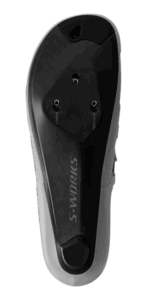
Fig 8: Specialized Ares 2.

- Bont Vaypor (2023)
https://bontcycling.com/products/vaypor-2023
Note: Bont’s “bathtub” carbon design wraps up the sides of the foot, which some riders love and others find too firm.

Fig 10: Bont Vaypor.
Important: The “best” shoe still depends on your foot shape, pressure tolerance, and how you ride. If you’re already getting nerve symptoms, it’s worth being cautious about overly rigid uppers or aggressive closure tension.
If you still have pain, the fix may not be “looser shoes”
Even with the right last shape, cycling foot pain can be multi-factorial.
Common contributors include:
- Cleat position (too far forward can increase forefoot load)
- Cleat float (too little can stress joints/soft tissue)
- Saddle height and fore-aft position
- Pedal stance width (Q-factor)
- Foot biomechanics (e.g., forefoot loading patterns)
- Prior nerve sensitivity or old injuries
If pain is limiting your riding, the goal is to identify what’s driving the symptoms – not just “buy wider.”
Frequently Asked Questions
1) How should cycling shoes fit if I have wide feet?
They should feel secure without compressing the forefoot. You should not get numbness, burning hotspots, or toe pinching during a normal ride. Wide feet usually need both adequate width and a toe box shape that doesn’t taper.
2) Why do my toes go numb even in “wide” cycling shoes?
Most commonly, the toe box still tapers (last shape issue) or closures are overtightened to stabilise the foot. Numbness can also be worsened by cleat position and excessive forefoot pressure over time.
3) Should I size up for wide feet?
Sizing up can add length but may not add the right width where you need it—and may reduce stability. It’s usually better to choose a shoe built on a more accommodating last and match sizing carefully.
4) Are carbon-soled shoes bad for wide feet?
Not necessarily—carbon soles improve efficiency. The problem is often the overall shoe shape and upper stiffness. A stiff upper combined with a tapered toe box is more likely to cause pressure symptoms.
5) When should I see a podiatrist for cycling foot pain?
If symptoms persist despite shoe adjustments, if you get repeated numbness/nerve symptoms, or if pain affects your performance or daily activities, an assessment can help identify whether the cause is shoe fit, bike setup, or biomechanics.
Conclusion: ride comfortably without sacrificing performance
If you have wide feet, cycling shoes shouldn’t feel like a trade-off between comfort and speed. In many cases, the breakthrough is choosing the right last shape – especially a straight last that matches the natural shape of your foot – then addressing any contributing bike-fit or biomechanical factors.
Whether you’re a weekend warrior or training seriously, you deserve to ride pain-free. If you’re dealing with numbness, hotspots, or persistent forefoot pain, a proper assessment can help you get back to enjoyable, confident riding.
Book an appointment (Podiatry Quest Singapore)
We have 5 locations across Singapore: Holland Grove, Novena, Tampines, Harbourfront, Raffles Place.
- Phone: +65 6027 2389
- WhatsApp: +65 8333 9643
- Website: https://www.podiatryquest.sg/
