Living with foot pain in Singapore usually means falling into a frustrating cycle: you rest over the weekend, the pain eases, and by Tuesday afternoon—after navigating MRT transfers and CBD concrete—it is back.
When foot pain keeps returning, it is rarely because it hasn’t had enough rest. It is usually because your daily routine demands more than your foot can currently handle.
Here is why your foot pain is sticking around, how to manage it, and when to seek professional help at our Novena clinic.
4 Common Reasons Foot Pain Recurs in Singapore
1. The Dynamic Footwear Mismatch
Switching drastically between different shoe types places conflicting demands on your feet:
- Rigid, narrow dress shoes or heels during the workweek in the CBD.
- Flat, unsupportive slippers or sandals on weekends.
- Cushioned running shoes for exercise.
If your shoes lack midfoot stability or pinch your toes, your muscles and tendons work twice as hard to stabilise your gait, leading to chronic overuse.
2. Sudden Changes in Daily Activity
Injuries do not just happen at the gym. A sudden spike in “cumulative load” is a major trigger. Think about:
- An influx of site visits or walking meetings.
- Extended standing at weekend events or conferences.
- Rushing through long commutes and MRT transfers.
3. Tight Calves and Stiff Ankle Joints
If your ankle cannot flex forward smoothly when you step, your body forces the movement elsewhere. This structural compensation shifts excessive pressure directly into your heel, arch, or the ball of your foot.
4. Overlooked Foot Biomechanics
Flat feet (overpronation) or high arches are not structural flaws, but they do dictate how weight is distributed. Flat feet tend to overstretch the plantar fascia, while high arches fail to absorb shock, hammering the heel and forefoot.
A Simple 14-Day Reset Plan
If your foot is flaring up, do not stop moving entirely. Total rest weakens the tissue further. Instead, implement this strategy for two weeks:
- ▢ Reduce Impact Volume: Cut your non-essential walking or running by 30% to 50%.
- ▢ Switch to Recovery Shoes: Wear supportive, stiff-soled shoes with ample toe room.
- ▢ Avoid Aggressive Stretching: Never stretch or deep-tissue massage directly into sharp pain.
- ▢ Target Calf Mobility: Gently stretch your calves only if it feels like a dull release, not a pull.
Identifying the Source: A Quick Self-Check
While not a substitute for a clinical diagnosis, where you feel the pain offers clues about what is being overloaded:
| Pain Location | Likely Drivers |
|---|---|
| Heel (Bottom or Back) | Plantar fascia strain or Achilles tendon loading. |
| Arch / Midfoot | Footwear lacking structural support; midfoot joint overload. |
| Ball of Foot (Forefoot) | Excessive pressure from narrow shoes or rigid toe joints. |
| Outer Edge of Foot | Poor ankle mechanics or compensation from uneven wear on shoe soles. |
Red Flags: When to Seek Immediate Medical Care
Do not attempt to manage foot pain at home if you experience any of the following:
- Inability to put any weight on the foot.
- Sudden, severe swelling, redness, or heat.
- An open wound, blister, or ulcer (especially if you have diabetes).
- New or worsening numbness and tingling in the toes.
When to See a Podiatrist
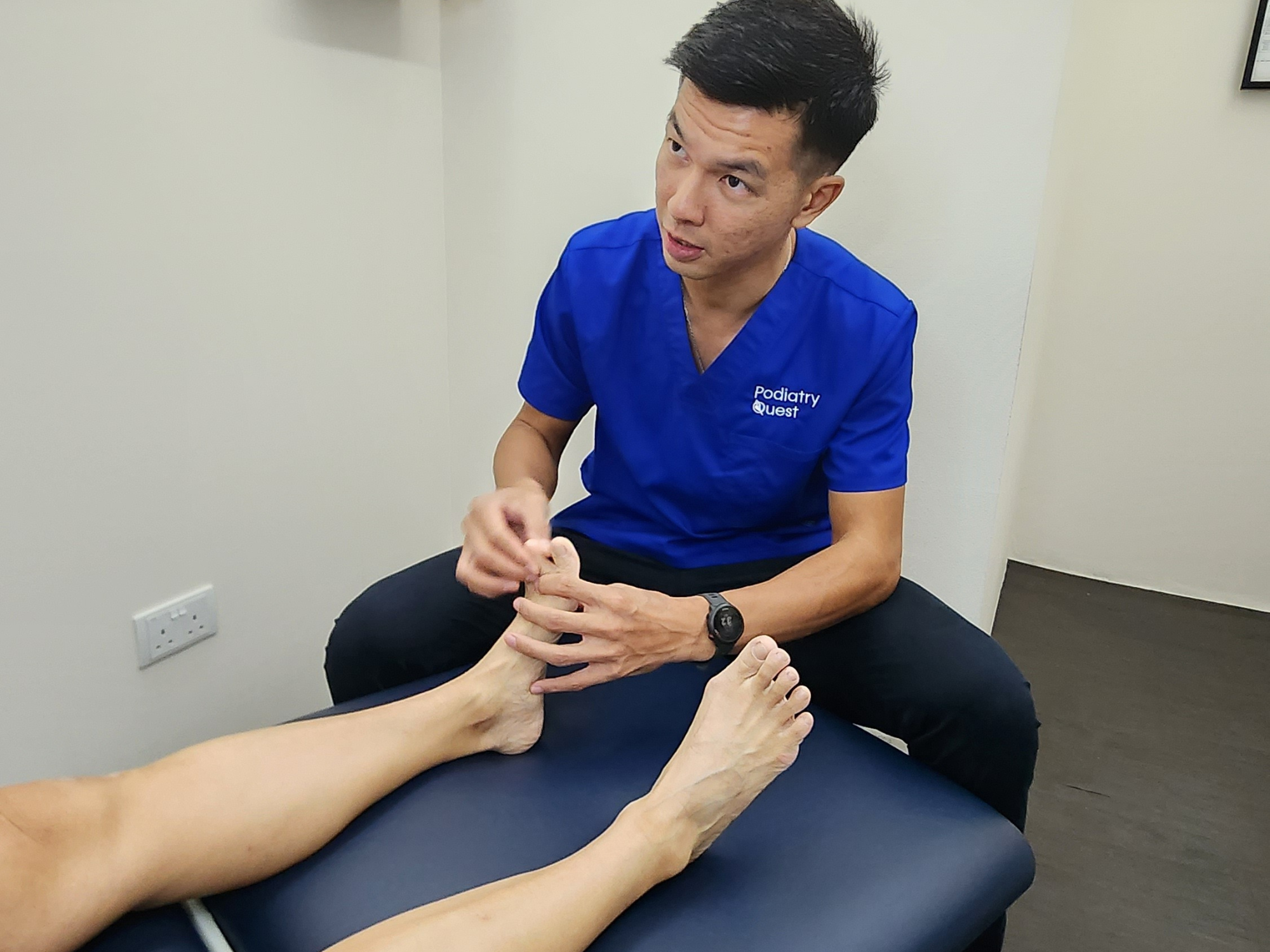
If your pain does not improve after two weeks of modified activity, or if it disappears only to return every month, you need a biomechanical assessment.
At Podiatry Quest Novena, we look beyond the painful spot to analyze your gait, joint mobility, and footwear. If structural alignment is the root cause, we prescribe Customised Foot Orthotics using precise 3D digital scans. These are designed to shift stress away from injured tissues so you can walk pain-free.
Frequently Asked Questions
Is all heel pain just plantar fasciitis?
No. While common, heel pain can also be caused by nerve entrapment, fat pad atrophy, stress fractures, or Achilles tendinitis. A proper assessment ensures you aren’t treating the wrong condition.
Should I buy off-the-shelf insoles?
Be cautious. Shoving a thick, generic insole into an already tight work shoe often increases pressure on the top of the foot, making the pain worse. Insoles must match both your foot mechanics and your specific footwear.
Summary Actions
- Modify, don’t stop: Cut walking distances in half temporarily rather than staying on the couch.
- Audit your shoes: Ditch flexible flats and worn-out slippers while recovering.
- Get an expert opinion: If the pain persists past 14 days, get it sorted before it becomes a chronic issue.
Resolve Your Foot Pain Today
Stop guessing which stretch or shoe will fix the problem. Book a comprehensive assessment with the team at Podiatry Quest.
- Clinics: Novena (Medical Hub), Holland Grove, Tampines, Harbourfront, Raffles Place
- Phone: +65 6027 2389
- WhatsApp: +65 8333 9643
- Website: podiatryquest.sg