
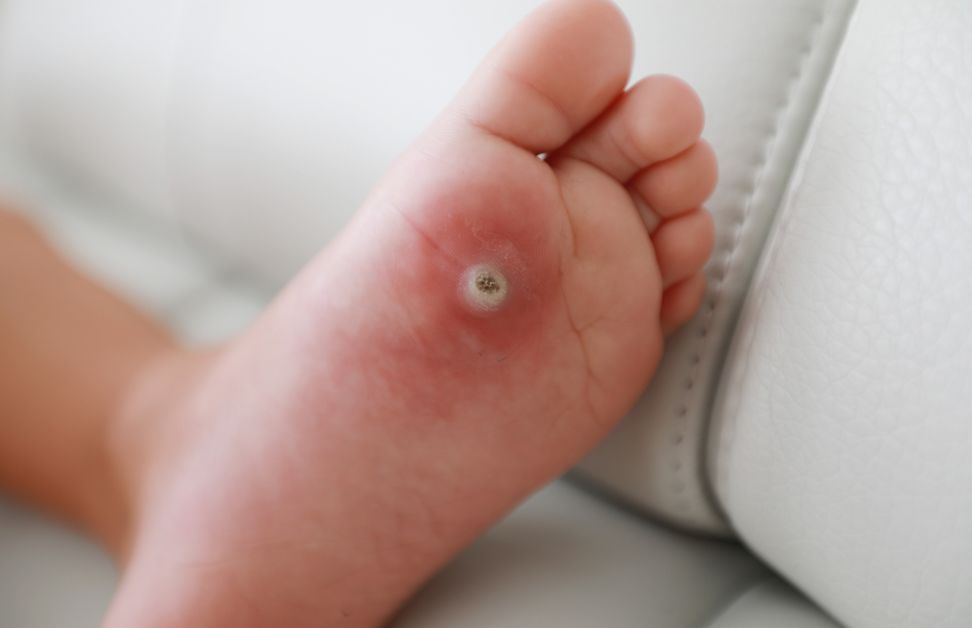
In the CBD, it’s common to walk more than you realise, especially around Raffles Place. When you’ve got a sore “spot” under your foot, every step becomes a reminder. Many people try over-the-counter (OTC) wart treatments first, but foot warts (also called plantar warts or verruca) can be stubborn and may not respond to DIY care.
What you’ll learn:
- How to tell a wart vs corn (and why the difference matters)
- Why OTC acids and “freeze kits” often don’t reach the active wart tissue
- What effective foot warts removal typically looks like in clinic (and what to expect)
- When to stop self-treating and see a podiatrist
This article is for people in Singapore with a painful plantar wart who have already tried OTC treatments (or are about to), and want a realistic plan that reduces recurrence. It focuses on why DIY treatment fails, how to avoid misdiagnosis (wart vs corn), and what “proper” treatment looks like in clinic. It’s different from generic wart articles by giving decision rules, common mistakes, and a clinician’s perspective on recurrence.
What is a foot wart (plantar wart) and why does it hurt?
A foot wart is caused by the human papillomavirus (HPV). On the sole, pressure from walking can push the wart tissue inward, which is why plantar warts can feel like a deep bruise or a sharp “stone in the shoe” pain.
Common signs include:
- Pain with pressure, especially when walking
- Thickened skin over a small area (often mistaken for a corn)
- Tiny black dots (clotted capillaries) in the lesion
Wart vs corn: a quick self-check (and when it’s not reliable)
Misidentifying the problem is one of the biggest reasons people waste months on the wrong treatment.
A simple guide (not a diagnosis)
A wart may:
- Hurt more with a side-to-side squeeze
- Disrupt normal skin lines
- Show small pinpoint dots when the surface is pared down
A corn may:
- Hurt most with direct downward pressure
- Have a more central “core” of hard skin
- Sit over a pressure point from footwear or gait
If you’re unsure, it’s worth getting assessed, especially if the spot is worsening, spreading, or affecting how you walk.
Why OTC foot wart treatments often fail
OTC treatments can help some mild cases, but plantar warts frequently persist because the active viral tissue sits deeper than people expect.
Here are the common reasons:
- The acid never reaches the wart because thick callus acts like a shield.
- Inconsistent application (skipping days, stopping when it “looks better”).
- Treating the wrong thing (corn or callus, not a wart).
- Spreading virus to nearby skin (picking, shaving, sharing tools, barefoot in damp areas).
- No plan for recurrence (wart shrinks, then returns because active tissue remains).
Common mistake: treating pain, not the lesion
Many people keep filing the area because it temporarily reduces pressure pain. But filing alone often doesn’t address the active wart tissue, and over-filing can irritate skin and make walking more painful.
What actually works for foot warts removal in Singapore (a practical ladder)
Different warts need different approaches. A podiatrist can confirm the diagnosis and recommend a pathway based on size, duration, pain level, and how deep the lesion is.
Step 1: Reduce the “callus shield” (debridement)
In clinic, we often start with sterile debridement to remove the thickened skin over the wart. This is important because it:
- Helps confirm whether it’s a wart vs corn
- Improves the effectiveness of any topical treatment
- Reduces pressure-related pain when walking
Step 2: Consider a clinic-based treatment plan (for suitable cases)
For persistent plantar warts, a structured protocol can be more effective than repeating random OTC products.
At Podiatry Quest, one option used in suitable cases is medical-grade nitric acid applied after debridement. The process is designed to target the active wart tissue while keeping downtime low. Treatment often requires multiple sessions, and many people can continue normal daily activity with mild short-term soreness.
Clinician’s perspective (what we commonly see)
In our clinics, we commonly see two patterns that keep foot warts around:
- A “wart” that’s actually a corn, driven by pressure from footwear or biomechanics. These cases need offloading and callus management, not repeated acids.
- A real wart that’s being under-treated because the callus shield was never reduced and the treatment wasn’t consistent.
Two practical “unpopular truths”:
- If the lesion has been there for months and is painful with walking, you usually need a structured plan (not a new product every week).
- If it keeps coming back, the goal isn’t just to “burn it off”. It’s to confirm the diagnosis, treat the active tissue, and reduce the conditions that let it persist.
When to stop self-treating and see a podiatrist
Consider professional assessment if:
- The pain is changing the way you walk (especially if you’re clocking lots of steps in the CBD)
- It’s spreading, multiplying, or recurring
- You’re not improving after a few weeks of consistent, correct OTC use
- You have diabetes, poor circulation, reduced sensation, or immune suppression
- The skin is breaking down, bleeding frequently, or looks infected
What to expect at a podiatry visit for a plantar wart
A typical appointment may include:
- History and foot exam (including checking footwear and pressure points)
- Wart vs corn confirmation
- Debridement (when appropriate)
- A tailored treatment plan with realistic timelines
Key takeaways
- Plantar warts can sit deeper than they look, so OTC acids often don’t reach the active tissue.
- Getting the diagnosis right (wart vs corn) saves time and pain.
- Debridement plus a structured clinic plan can improve outcomes for stubborn warts.
- Recurrence is common, but it can often be reduced with the right process.
Frequently Asked Questions
How many sessions does foot warts removal usually take?
It depends on how long the wart has been there, how deep it is, and how your skin responds. For persistent plantar warts, multiple sessions are often needed. A podiatrist can give a clearer estimate after assessing the lesion.
Does plantar wart treatment hurt?
Some discomfort is possible, especially if the wart is deep or under high pressure. Many clinic-based approaches aim to keep treatment tolerable and minimise downtime. Mild soreness for a day or two can happen.
Can I just cut the wart out myself?
It’s not recommended. Cutting can increase irritation, risk infection, and potentially spread the virus to nearby skin. It also makes it harder to confirm whether it was a wart or a corn.
Why does my foot wart keep coming back?
Common reasons include incomplete treatment of active tissue, thick callus shielding the wart, reinfection from damp communal areas, or misdiagnosis (it may be a corn/callus problem).
Are foot warts contagious?
Yes. HPV can spread through skin contact and surfaces, especially in warm, damp environments. Wearing footwear in communal wet areas and avoiding picking/shaving can help reduce spread.
Seek Podiatry Help for Foot Warts
If you’ve been stuck in the OTC cycle and the lesion is still painful, it’s worth getting a clear diagnosis and a structured plan. Foot warts can be managed, and you don’t have to keep guessing.
Book a consultation at Podiatry Quest Singapore (5 locations): Holland Grove, Novena, Tampines, Harbourfront, Raffles Place.
Phone: +65 6027 2389
WhatsApp: +65 8333 9643
Website: https://www.podiatryquest.sg/
