

If you have a painful ingrown toenail, you may have already tried trimming the corner, soaking the foot, or switching shoes. Sometimes it settles, but in many cases it comes back (often worse) because the nail edge is still pressing into skin.
In our clinics, we commonly see this after a busy week of walking, standing, and tight footwear. If you’re in Tampines, this can be especially common after long days on your feet in work shoes or a weekend of errands.
What you’ll learn
- How to tell when an ingrown toenail is “urgent”
- What home care can help (and what usually makes it worse)
- What professional ingrown toenail treatment can involve (including Onyfix vs PNA in suitable cases)
This guide is for people in Singapore with a recurring or worsening painful nail edge (with or without infection) who want a clear decision path. It focuses on what works step-by-step, and what to do when “cutting the corner” has failed. It also explains Onyfix vs partial nail avulsion with phenolisation (PNA) in plain language, which is often missing or confusing in other articles.
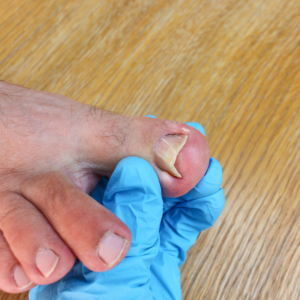
First, what is an ingrown toenail?
An ingrown toenail happens when the side of the nail (often the big toe) presses into the surrounding skin. This can trigger:
- Pain and tenderness at the nail edge
- Redness and swelling
- Weeping fluid or pus if infection develops
- Overgrown “proud flesh” (inflamed tissue) in more persistent cases
A common related issue is paronychia, which is inflammation or infection of the skin around the nail.
When an ingrown toenail is urgent (don’t wait it out)
Seek prompt assessment if you have any of these:
- Increasing redness, warmth, swelling, or throbbing pain
- Pus, a bad smell, or a wound that isn’t drying up
- Red streaking up the toe, fever, or feeling unwell
- You have diabetes, poor circulation, neuropathy, or are immunocompromised
- You cannot wear shoes or walk normally due to pain
These situations may need earlier intervention to prevent a small problem becoming a larger infection.
The uncomfortable truth: “digging the corner out” usually backfires
Many people try to:
- Cut a deep V into the nail
- Pick or dig into the corner with a tool
- Tear out the nail corner after soaking
This can give temporary relief, but it often causes:
- More inflammation and swelling, which traps the nail edge further
- Small skin injuries that raise infection risk
- Jagged nail edges that keep catching as the nail grows
Common mistakes that keep it coming back
- Cutting nails too short, or rounding the corners aggressively
- Wearing narrow toe-box shoes (common with work shoes)
- Leaving nail trauma unaddressed (sports, stubbing the toe)
- Ignoring biomechanical factors that increase toe pressure (certain foot shapes or gait patterns)
What you can try first at home (for mild, early cases)
If the pain is mild and there are no signs of infection, home care may help:
- Footwear change (immediate): switch to a wide toe-box shoe or sandals for a few days.
- Warm salt-water soaks: 10–15 minutes, once or twice daily.
- Keep it clean and dry: especially if you sweat a lot or the toe stays damp.
- Do not dig into the corner: avoid sharp tools.
- Protect the area: a small dressing can reduce friction in shoes.
If pain is not improving after a few days, or if it keeps recurring, it’s time to consider professional care.
Ingrown toenail treatment options in Singapore (what a podiatrist can do)
An assessment matters because treatment depends on what’s actually driving the problem (nail shape, skin swelling, infection, repeated trauma, and how deeply the edge is embedded).
A podiatrist may:
- Confirm whether it’s truly an ingrown nail vs other causes of toe pain
- Gently clear debris and reduce pressure at the nail edge
- Manage inflamed tissue and give structured aftercare guidance
- Recommend a conservative option (where suitable) or a procedure for recurring cases
Option 1 (conservative, suitable cases): ONYFIX nail bracing
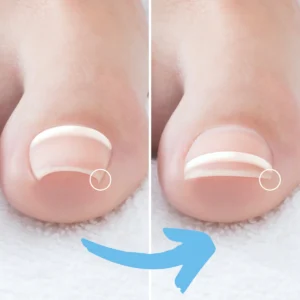
In suitable cases, ONYFIX is a needle-free, non-invasive nail bracing system designed to help the nail grow flatter over time.
It may be considered when:
- The ingrown toenail is recurring but not deeply embedded
- You want a conservative approach
- You prefer to avoid a procedure where possible
What to expect:
- The brace is applied to the nail to change the growth direction gradually
- Many people can continue normal daily activity
- You’ll still need good footwear choices and nail care habits to reduce recurrence risk
Option 2 (recurring/infected cases): Partial nail avulsion with phenolisation (PNA)
For recurring, severe, or infected ingrown toenails, a podiatrist may recommend partial nail avulsion with phenolisation (PNA) in suitable cases. This is a minor in-clinic procedure that removes a small side portion of the nail and uses phenol to reduce recurrence from that nail edge.
What to expect (high-level):
- Local anaesthetic is used
- A small nail edge segment is removed (often a few millimetres)
- Phenol is applied to the nail matrix area to reduce the chance of that edge regrowing inward
- You can usually walk out the same day, with clear aftercare instructions
What to do if it hasn’t improved after “standard advice”
If you’ve already tried soaking, trimming, or changing footwear and it’s still recurring, consider these next steps:
- Stop self-trimming the corner deep into the nail
- Switch to wider toe-box footwear for 2 weeks while inflammation settles
- Book an assessment to check whether:
- The nail edge is too embedded for home care
- There is a hidden infection pocket
- Nail shape or repeated trauma is the driver (sports, tight shoes, toe bumping)
Clinician’s perspective: we often see people come in after weeks of “DIY corner digging” where the toe is now more swollen, which makes conservative care harder and prolongs recovery.
How to prevent ingrown toenails from coming back
Prevention is often simple, but it needs consistency:
- Trim nails straight across, not too short
- Avoid rounding the corners aggressively
- Choose shoes with a roomy toe box, especially for long walking days
- Keep feet dry (change socks, rotate shoes) if you sweat easily
- Address repetitive pressure points early, before the skin becomes chronically inflamed
Frequently Asked Questions
How do I know if my ingrown toenail is infected?
Signs can include increasing redness, warmth, swelling, worsening pain, and discharge (especially pus). If you feel unwell, have spreading redness, or have risk factors like diabetes, get assessed promptly.
Does ingrown toenail treatment hurt?
Many treatments aim to reduce pressure and pain. If a procedure is recommended, local anaesthetic is typically used. Your podiatrist can explain what you may feel during and after treatment.
Is Onyfix better than ingrown toenail surgery?
They serve different needs. ONYFIX may be suitable for conservative correction in appropriate cases. For persistent, severe, or infected cases, a procedure like PNA may reduce recurrence more effectively. An assessment helps choose the right approach.
How long does it take to recover after PNA?
Recovery varies by person and how inflamed the toe is at the start. Many people can return to light activities quickly, but you should follow the aftercare plan and footwear guidance to support healing.
Can an ingrown toenail go away on its own?
Mild cases sometimes settle with footwear changes and careful care. Recurring or worsening cases often need a structured plan, and sometimes professional treatment, to prevent repeated flare-ups.
Seek Podiatry Treatment for Painful Ingrown Toenails
If you’re dealing with a painful or recurring ingrown toenail, the goal is to calm inflammation, reduce pressure at the nail edge, and choose the right treatment pathway so it doesn’t keep coming back.
Podiatry Quest Singapore provides ingrown toenail assessment and treatment options (including conservative nail bracing and in-clinic procedures where suitable). To book, visit https://www.podiatryquest.sg/, call +65 6027 2389, or WhatsApp +65 8333 9643.
We have 5 clinic locations: Holland Grove, Novena, Tampines, Harbourfront, Raffles Place.
