
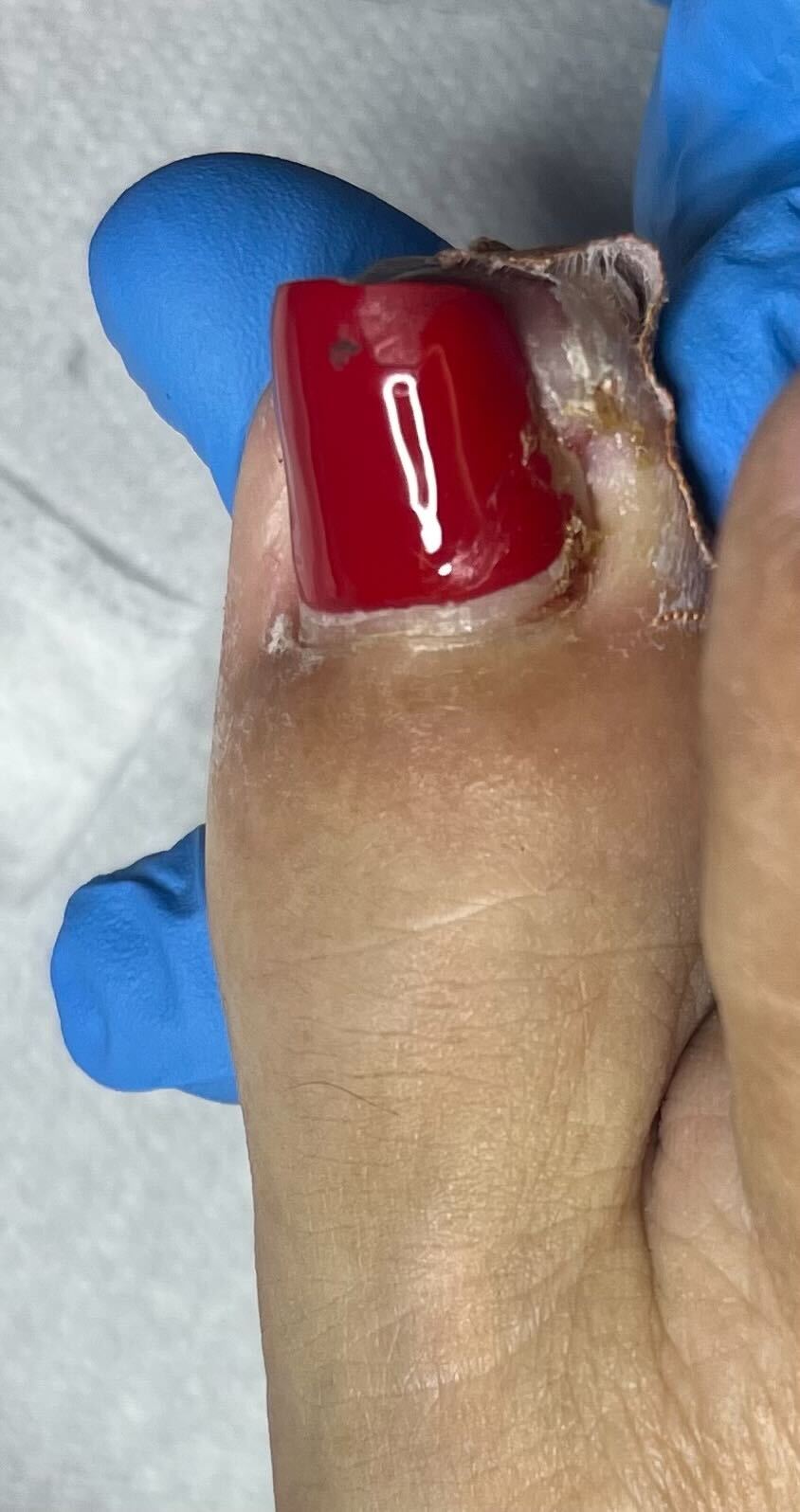
An infected ingrown toenail is not just a sore nail corner. Once there is pus, spreading redness, swelling, or throbbing pain, the problem has moved beyond normal irritation.
Many people try to “fix” it by cutting deeper into the corner. That can make the toe feel better for a short while, but it often leaves behind a sharp nail spicule and creates a small wound where bacteria can enter.
At Podiatry Quest Singapore, we commonly see infected ingrown toenails after weeks of self-trimming, tight footwear, and waiting for the swelling to settle on its own. The right next step depends on whether this is early inflammation, active infection, or a recurring nail edge that needs more structured care.
What You’ll Learn
- How to tell if an ingrown toenail may be infected
- What not to do when there is pus, swelling, or worsening pain
- When to see a podiatrist urgently
- How conservative care, ONYFIX, and PNA may fit different stages
What Counts as an Infected Ingrown Toenail?
An ingrown toenail occurs when the edge of the nail presses into the surrounding skin. The skin becomes irritated, then inflamed. If bacteria enter through a break in the skin, an infection can develop.
According to clinical guidance on ingrown toenail conditions, common warning signs include:
- Pus or yellow/green discharge
- Increasing redness or warmth around the nail fold
- Throbbing pain
- Swelling that makes the toe look tight or shiny
- Bleeding or wet tissue around the nail edge
- A bad smell
- Pain that makes shoes difficult to wear
A related term is paronychia, which refers to inflammation or infection of the skin immediately surrounding the nail.
When to Get Help Quickly
Do not keep self-treating if the toe is deteriorating. Seek a prompt clinical assessment if you notice:
- Pus, discharge, or a foul odour
- Redness spreading beyond the nail fold
- Worsening swelling or heat
- Severe pain when the toe is touched
- Fever or feeling generally unwell
- A wound that is not drying or closing
- Underlying conditions: Diabetes, poor circulation, neuropathy, or reduced immunity
If you belong to a high-risk group, seek professional help early rather than waiting. Infection becomes considerably more difficult to manage once extensive swelling and tissue overgrowth develop around the nail edge.
What Not to Do When the Toe Looks Infected
The most common mistake is attempting “bathroom surgery” by digging deeper into the corner.
Avoid:
- Cutting the nail down the side
- Pulling out the corner with tweezers
- Cutting a “V” shape into the top of the nail
- Squeezing the swollen skin to force out fluid
- Applying harsh, corrosive chemicals to broken skin
- Continuing long walks or workouts in tight footwear
- Covering the toe tightly and leaving it damp
These habits often cause further trauma, push a sharp nail spicule deeper into the tissue, or worsen the bacterial load around inflamed skin.
What You Can Do Safely Before Your Appointment
If you are waiting for your clinical consultation, the primary goal is to minimise pressure and maintain strict hygiene:
- Switch Footwear Immediately: Opt for open-toe sandals or shoes with a wide, roomy toe box.
- Keep the Area Clean and Dry: If there is active discharge, apply a clean, breathable dressing and replace it whenever damp.
- Reduce Physical Load: Avoid running, sports, or prolonged walking until the toe is evaluated.
- Leave the Nail Alone: Do not dig, pick, or attempt to cut the corner.
Note: While warm salt-water soaks can temporarily soothe mild surface irritation, they will not dislodge an embedded nail edge. If pus, spreading redness, or substantial swelling is present, soaks should never replace professional treatment.
Clinician’s Perspective: Common Patterns We See
In clinic, we frequently observe two distinct presentation patterns:
- The “Weekend Fix” Pattern: The toe begins to hurt, the individual cuts the nail side shorter, and then wears closed formal or sports shoes. A few days later, the toe flares up with severe swelling because the damaged tissue is continually aggravated by the remaining nail edge.
- The “Tiny Splinter” Pattern: The visible edge of the nail appears clean and straight, but a tiny, sharp nail fragment (spicule) remains embedded deep within the lateral fold—acting just like a wooden splinter under the skin. Until this mechanical obstruction is properly removed, the toe will continue to weep, bleed, and flare up.
For individuals working and living around busy commercial hubs like Raffles Place, Harbourfront, Novena, Tampines, or Holland Grove, daily closed office footwear, long commutes, and gym sessions continuously compound this pressure.
Infected Ingrown Toenail Treatment: What a Podiatrist May Do
A podiatrist will first assess whether the condition is early-stage inflammation, active infection, a retained nail spicule, hypergranulation tissue, or an anatomical nail shape problem.
Our skin and nail care services focus on accurate diagnosis and gentle pressure relief. Depending on the severity, care typically involves:
- Thorough antiseptic cleansing and evaluation of the nail fold
- Gentle clearance of the embedded nail border or sharp spicule
- Application of sterile clinical dressings and aftercare guidance
- Practical footwear modifications to eliminate local pressure
- Discussing long-term corrective solutions (such as ONYFIX or PNA) if the nail shows a high risk of recurrence
Where ONYFIX Fits When Infection Is Involved
ONYFIX nail bracing is a non-invasive, needle-free composite system designed to guide curved nails into a flatter, healthier growth profile over time.
However, ONYFIX is generally not applied while a toe has an active, acute infection or severe discharge. The clinical priority is always to resolve the active infection, relieve acute pressure, and ensure no sharp nail fragments remain embedded.
ONYFIX may be considered at a later stage if:
- Involuted or curved nail shape is the root cause
- The acute infection and swelling have fully resolved
- A non-invasive, conservative corrective pathway is preferred
When Partial Nail Avulsion (PNA) May Be Discussed
For severe, chronically recurring, or heavily infected ingrown toenails, a Partial Nail Avulsion (PNA) procedure may be recommended.
PNA is a minor, in-clinic procedure performed under local anaesthesia where only the problematic side sliver of the nail is removed. A chemical agent (phenol) is applied to the base to prevent that narrow edge from regrowing.
PNA is commonly discussed when:
- The same nail border repeatedly flares up or becomes infected
- The nail edge is deeply curved or embedded
- Hypergranulation (overgrown, bleeding tissue) has developed
- Conservative management fails to provide lasting relief
- The pain continually interferes with work, exercise, or everyday footwear
PNA preserves the vast majority of the natural nail plate, targeting only the offending margin. For a detailed comparison of options, read our guide on ONYFIX nail bracing vs partial nail avulsion.
Why Antibiotics Alone May Not Solve the Problem
Oral antibiotics may be prescribed to control spreading bacterial infection, but they cannot physically remove a rigid nail border that is slicing into soft tissue.
If the underlying mechanical cause is not addressed, the toe enters a recurring cycle:
- The nail edge presses into skin.
- The skin breaks down and becomes inflamed.
- Infection risk increases.
- The swelling traps the nail edge further.
- The nail continues to irritate the same spot.
For long-term resolution, explore comprehensive options for ingrown toenail treatment in Singapore to correct the physical source of irritation.
How to Prevent Recurrence
Once the acute issue has settled, structured prevention is vital:
- Trim straight across: Never round down or dig into the lateral corners.
- Keep edges visible: Leave the nail border resting comfortably above the skin fold.
- Choose proper footwear: Ensure the toe box is wide enough so toes are not squeezed together.
- Manage foot hygiene: Change socks promptly if your feet sweat during sports or long commutes.
- Act early: If you feel initial pressure returning, get an assessment before tissue breakdown occurs.
For further condition background and preventative advice, visit our main ingrown toenails condition guide.
Frequently Asked Questions
How do I know if my ingrown toenail is infected?
Common signs include pus, yellow or green discharge, spreading redness, noticeable heat, throbbing pain, bleeding tissue, or an unpleasant smell. If redness spreads up the toe or you feel feverish, seek prompt medical care.
Can I treat an infected ingrown toenail at home?
Mild, early irritation without broken skin may settle with wider shoes and careful hygiene. However, if there is pus, spreading inflammation, severe pain, or you have diabetes or poor circulation, professional podiatric assessment is necessary.
Should I cut out the infected nail corner myself?
No. Attempting to cut out the corner at home often leaves a jagged nail spicule embedded deeper in the tissue, creating open wounds that accelerate bacterial infection.
Will antibiotics fix an infected ingrown toenail?
Antibiotics treat bacterial proliferation, but they do not eliminate the physical nail edge pressing into the skin. Unless the mechanical pressure point is managed, symptoms typically return once the antibiotic course ends.
When is PNA needed for an infected ingrown toenail?
PNA is typically considered for recurring, deeply embedded, or severely infected ingrown toenails that fail to respond to conservative care. Suitability depends on your nail anatomy, medical history, and clinical presentation.
Key Takeaways
- Pus, spreading redness, localised heat, and throbbing pain are red flags for infection.
- Avoid bathroom surgery—cutting deeper almost always worsens the issue.
- Antibiotics treat bacteria, but mechanical removal of the offending nail border is required for lasting relief.
- ONYFIX is an effective non-invasive option once acute inflammation has settled; PNA offers a permanent solution for recurring cases.
- Individuals with diabetes or circulation issues must seek immediate clinical care.
Summary: Take the Right Next Step
If your ingrown toenail is swollen, weeping, or increasingly painful, stop trimming down the sides. The safest approach is to keep the area clean, switch to open footwear, and book a professional assessment.
Podiatry Quest Singapore offers targeted treatment plans for painful and infected ingrown toenails, ranging from conservative care and ONYFIX bracing to in-clinic PNA procedures.
- Clinic Locations: Holland Grove | Novena | Tampines | Harbourfront | Raffles Place
- Phone: +65 6027 2389
- WhatsApp: +65 8333 9643
- Website: podiatryquest.sg
Reviewed by Yeo Boon Kiak, Podiatry Quest Singapore. Member of the Podiatry Association Singapore.
