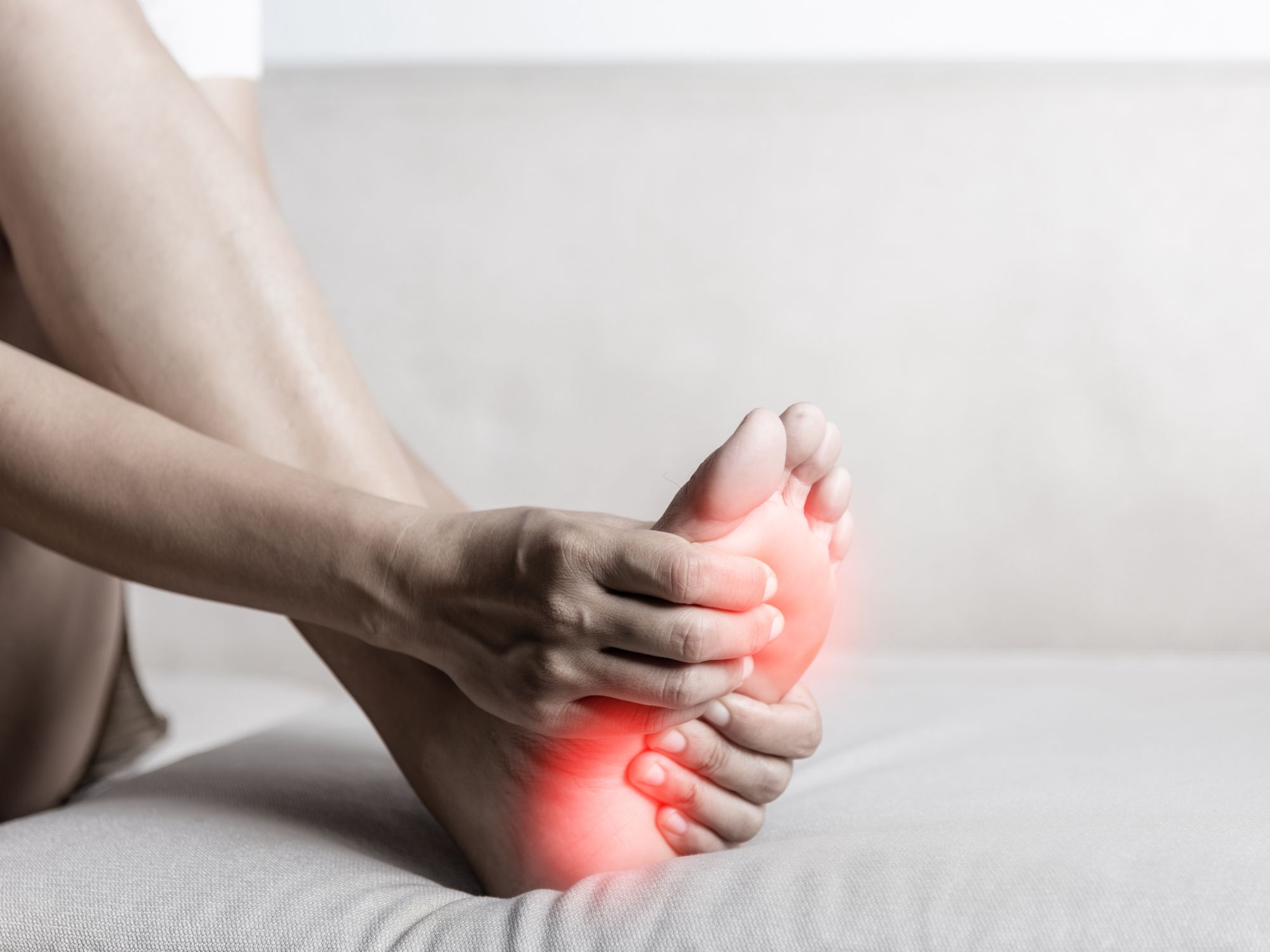
1. Where Does It Hurt?
Different pain locations signal different mechanical issues. Identifying your “Pain Zone” is the first step in our diagnostic process:
Heel & Arch Pain: Often felt during the first steps of the day or after long periods of standing.
- Common causes: Plantar Fasciitis, Achilles Tendinopathy, or Arch Collapse.
Ball of Foot Pain: A burning or sharp sensation, often described as “walking on pebbles.”
- Common causes: Morton’s Neuroma, Metatarsalgia, or Sesamoiditis.
Top of Foot & Ankle Pain: Pain that worsens with movement or tight footwear.
- Common causes: Extensor Tendonitis, Tibialis Posterior issues, or Ankle Impingement.
Toe & Joint Pain: Swelling, redness, or stiffness in the toe joints.
- Common causes: Bunions (Hallux Valgus) or Arthritis
Pain in the foot, heel, ankle, and lower limb often stems from musculoskeletal injuries, sporting injuries, or chronic issues due to overuse and poor biomechanics. Getting the right diagnosis is the first crucial step.
Detailed Assessment & Accurate Diagnosis
Your journey back to pain-free movement begins with a thorough evaluation:
- Detailed History Taking: Understanding your injury status, lifestyle, and pain triggers.
- Musculoskeletal Assessment: Evaluating joint function, muscle strength, and flexibility.
- Biomechanical Analysis: Assessing how you stand and move.
We accurately diagnose your condition before creating a bespoke, goal-oriented management plan.
2. The Podiatry Quest Difference: A 3-Step Recovery Roadmap
Our Evidence-Based Approach to Foot Health
We move beyond the “rest and ice” advice. Our clinical framework is built on three distinct phases of care:
Phase 1: The Biomechanical Audit (Diagnosis)
We utilise Runeasi 3D Gait Analysis – the first and only of its kind in Singapore podiatry – to see what the human eye misses. This medical-grade technology captures objective data on your impact forces, loading symmetry, and joint stability. We don’t guess why you’re in pain; we measure it.
Phase 2: Targeted Load Management (Relief)
Once the cause is identified, we act quickly to reduce your pain levels. Depending on your diagnosis, this may involve:
Phase 3: Precision Correction (Prevention)
To ensure the pain doesn’t return, we fix the underlying mechanics.
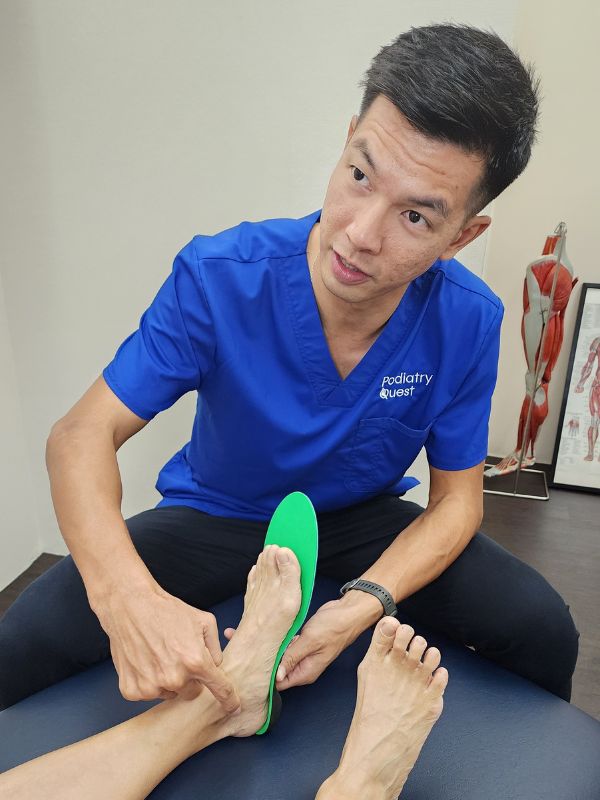
- Custom 3D-Printed Orthotics: Using sub-millimeter 3D scans, engineered specifically to correct the imbalances found in your gait analysis.
- Clinical Footwear Prescription: Unbiased advice on the best shoes for your foot type and lifestyle.
- Rehabilitation & Exercises Programs: Specific exercises to strengthen, stretch, and ensure long-term stability.
Our primary goal is to ensure you can enjoy a pain-free, active life and achieve the lifestyle you deserve.
Common conditions: