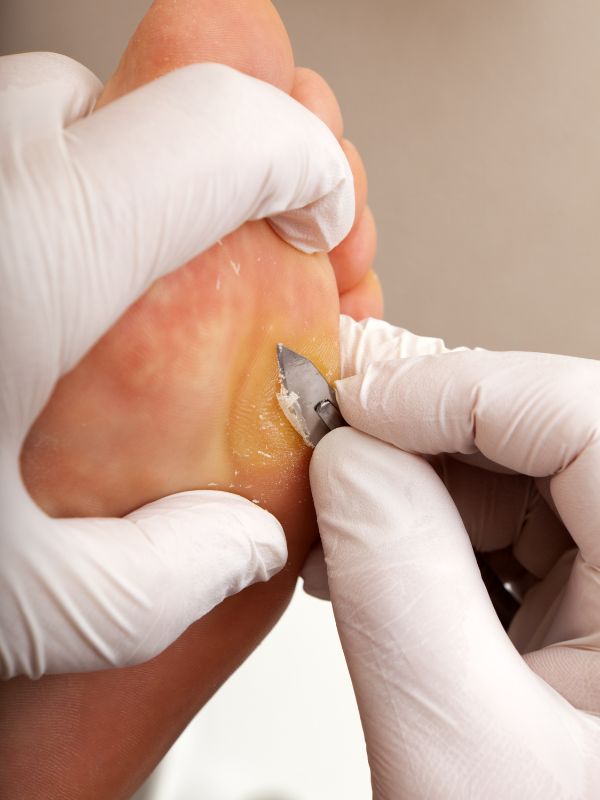
Hyperkeratosis is the physiological thickening of the stratum corneum—the outermost protective layer of the epidermis. When cutaneous tissues encounter sustained, repetitive mechanical forces (compression and shear), the body upregulates keratinocyte production as a defensive mechanism to shield underlying soft tissues from ulceration.
When this hyperkeratotic build-up becomes excessive, it ceases to be protective and transforms into a source of focal mechanical pain. Depending on the distribution of force, this process manifests as either a diffuse callus or a focused corn:
-
Callus (Tyloma): A broad, shallow, diffuse area of thickened, yellowish stratum corneum typically distributed across high-load surfaces, such as the plantar forefoot under the metatarsal heads or the circumference of the heel margin.
-
Corn (Heloma): A discrete, circumscribed hyperkeratotic lesion containing an inverted, conical central core (nucleus). This dense keratin plug points inward toward the dermis. Under direct weight-bearing pressure, this rigid core compresses the richly innervated papillary dermis, producing acute, sharp pain resembling a needle or pebble embedded in the skin.