Is It a Bone Reaction or a Bone Crack?
One of the most critical roles of a podiatrist is differentiating between common MTSS and the more serious Tibial Stress Fracture. Misdiagnosing this can lead to months of unnecessary pain or a complete bone break.
| Symptom |
Shin Splints (MTSS) |
Stress Fracture |
| Pain Location |
Diffuse (spread over 5cm or more) |
Focal (one specific “point” of pain) |
| Morning Pain |
Feels stiff, but “warms up” with movement |
Sharp pain immediately upon weight-bearing |
| Impact |
Aches after exercise |
Hurts during rest and even at night |
| Touch |
Tender along the inner bone edge |
Intense pain when pressing one specific spot |
Clinical Note: If you can pinpoint your pain to a single finger-width area, you need a professional MSK assessment immediately to rule out a fracture.
We Don’t Guess. We Measure Your Impact with Runeasi 3D.
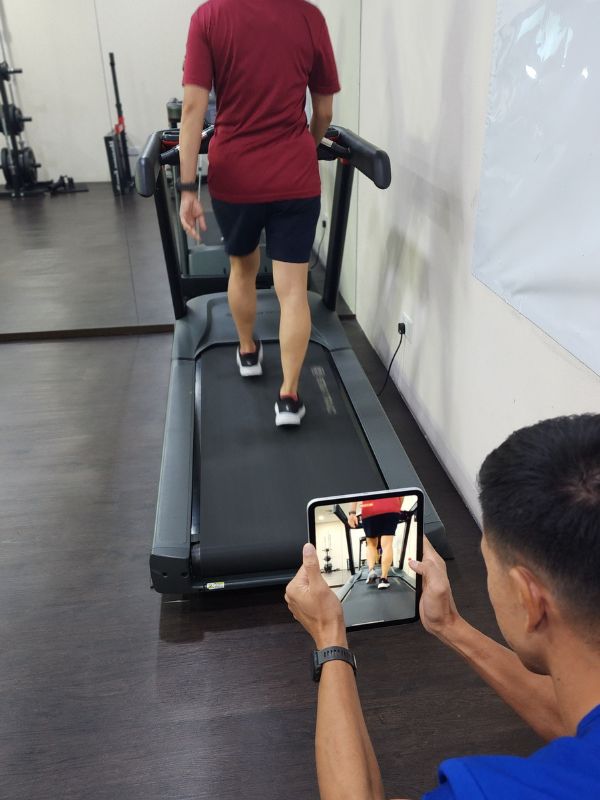
Traditional video analysis on a treadmill is often inaccurate because people walk and run differently on a moving belt. At Podiatry Quest, we use Runeasi 3D Wearable Sensors – the gold standard in gait technology.
- Impact Loading: We measure the exact “shudder” (G-force) traveling up your tibia with every step and how this is absorbed by your body.
- Symmetry Check: We identify if one leg is absorbing >10% impact than the other – a common hidden cause of one-sided shin splints.
- Dynamic Stability: Our sensors track how your pelvis and ankles react to the ground in real-time, pinpointing the “biomechanical leak” that is overloading your shins.